IAS Guest Vincenzo Vagnoni Leads Discovery of New Heavy Proton-like Particle
LHCb breakthrough marks first post-upgrade discovery and advances the study of rare heavy-quark matter


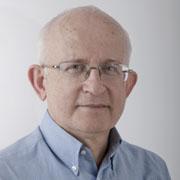
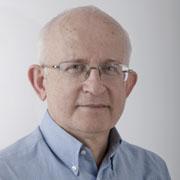
Dr. Vincenzo Vagnoni, who visited the Institute for Advanced Studies (IAS) at Tel Aviv University in May 2025 and delivered the Judah M. Eisenberg Memorial Lecture, has led a major new discovery at CERN as spokesperson of the LHCb Collaboration.
A leading experimental particle physicist, Dr. Vagnoni plays a central role in advancing the study of heavy quarks and rare particle decays. Under his leadership, the LHCb collaboration - one of the largest international efforts in particle physics, comprising nearly 1,800 scientists from over 100 institutes worldwide - continues to produce high-precision measurements that probe the fundamental structure of matter and test the limits of the Standard Model.
The collaboration has now observed a new baryon, a proton-like particle composed of two charm quarks and one down quark. This rare state, known as a doubly charmed baryon, is approximately four times heavier than the proton and extremely short-lived, surviving for only about 45 femtoseconds. It was identified with a statistical significance of 7 sigma, well above the threshold required to claim a discovery.
“This is the first new particle identified after the upgrades to the LHCb detector that were completed in 2023,” said Dr. Vagnoni. “The result will help theorists test models of quantum chromodynamics, the theory of the strong force that binds quarks into not only conventional baryons and mesons but also more exotic hadrons.”

Artist’s impression of the new particle, which contains two charm quarks and one down quark. (Image: CERN)
The discovery was presented at the Rencontres de Moriond conference and brings the total number of hadrons discovered at the Large Hadron Collider to around 80. It follows an earlier observation by LHCb in 2017 of a closely related particle containing two charm quarks and one up quark. Despite their similarity, the newly discovered particle has a significantly shorter lifetime due to subtle quantum effects, making it even more challenging to detect.
During his IAS lecture in May 2025, titled “New Results from the LHCb Experiment at the LHC,” Dr. Vagnoni introduced the scientific scope of the collaboration and emphasized the central role of flavor physics in exploring fundamental interactions. He presented key results on topics including CP violation, heavy-quark spectroscopy, and precision measurements at the LHC, while also outlining future prospects for the experiment. The newly announced discovery builds directly on this research program and reflects the increasing capabilities of the upgraded detector.
“What makes this result so exciting is that we are opening a new window onto a very unusual form of matter,” noted Prof. Ao Xu, a member of the collaboration. “This truly marks the beginning of a new era for these studies.”
The finding provides important input for the study of quantum chromodynamics and the behavior of systems containing multiple heavy quarks, an area of active theoretical research.
It also connects to a broader line of theoretical work on heavy-quark hadrons, including studies by Prof. Marek Karliner, former director of the IAS. Prof. Karliner and collaborators previously predicted the properties of exotic tetraquark states, later confirmed experimentally at CERN. While the newly discovered particle belongs to a different class, both lines of research contribute to a deeper understanding of the rich spectrum of matter formed by quarks.
The IAS warmly congratulates Dr. Vagnoni and the LHCb collaboration on this significant achievement, marking an important step forward in uncovering the fundamental building blocks of the universe.
Related Articles