IAS mourns the passing of IAS Scholar, Nobel Laureate François Englert
Groundbreaking physicist François Englert, whose work helped explain the origin of mass in the universe, died at 93.


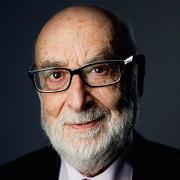
It is with great sadness that the Institute for Advanced Studies at Tel Aviv University has learned of the passing of Prof. François Englert, Nobel Laureate in Physics (2013), who died on June 18, 2026, at the age of 93.
Prof. Englert was one of the architects of the Brout–Englert–Higgs mechanism, the theoretical framework that explains how elementary particles acquire mass. The theory, developed together with Robert Brout and independently by Peter Higgs, was experimentally confirmed in 2012 through the discovery of the Higgs boson at CERN. For this achievement, Prof. Englert and Peter Higgs were awarded the 2013 Nobel Prize in Physics.
Prof. Englert maintained a close relationship with Tel Aviv University and the Institute for Advanced Studies for more than four decades. First invited to the Institute in 1984/1985, he returned on several occasions over the years and most recently served as a Senior Professor by Special Appointment at Tel Aviv University.

IAS Senior Professor by Special Appointment François Englert in a meeting with faculty and students, 27.10.22, Melamed Hall, Shenkar Building.
A Professor Emeritus at the Université libre de Bruxelles, Prof. Englert made fundamental contributions to particle physics, quantum field theory, cosmology, string theory, and supergravity. His pioneering work transformed our understanding of the fundamental laws of nature and inspired generations of physicists around the world.
On behalf of the IAS community, we extend our heartfelt condolences to Prof. Englert’s family, friends, colleagues, and former students. Beyond his extraordinary scientific achievements, Prof. Englert will be remembered by those who had the privilege of knowing him as a remarkably humble, gracious, and kind individual. Despite his immense accomplishments and international acclaim, he was always approachable, generous with his time, and a pleasure to meet. He will be greatly missed, but his scientific legacy will continue to inspire future generations.
Related Articles